

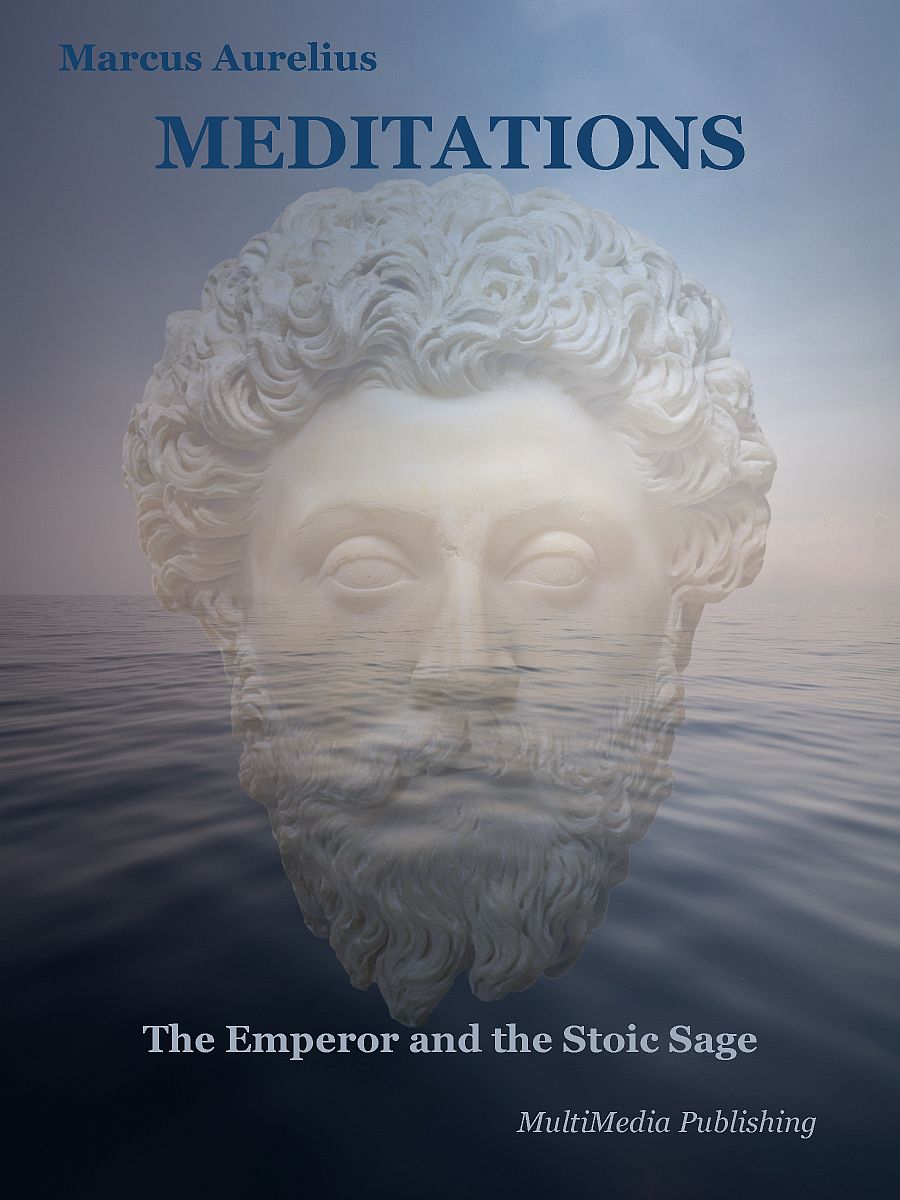
By Marcus Aurelius — Annotations by Nicolae Sfetcu
A timeless manual for self-mastery, leadership, and calm—now presented with a contemporary scholarly essay that illuminates its big ideas.
Why this book
- Lead with clarity. Learn a ruler’s approach to resilience, duty, and justice from the only Roman emperor-philosopher.
- Think better under pressure. Concrete practices for taming anger, anxiety, and distraction—straight from Marcus’s private notebook.
- See the bigger picture. A new annotated essay explains the Stoic foundations—virtue, reason & nature, mortality, self-command, and cosmopolitan duty.
What’s inside
- Complete Meditations in 12 books (Marcus’s personal reflections, composed during military campaigns).
- Original scholarly essay: The Emperor and the Stoic Sage: Philosophical Themes in Marcus Aurelius’ Meditations — with abstract, introduction, and thematic chapters (ethics, providence & logos, impermanence, inner citadel, social duty).
- Concise biography: “Marcus Aurelius Antoninus” (early life, education, reign, wars, policies, family, legacy).
- Bibliography for further study.
Who it’s for
Leaders and builders • Creatives & founders • Students of philosophy & classics • Anyone seeking practical calm and character.
Look inside (2 lines we love)
- “Do not act as if you had ten thousand years to live… whilst you live, while you can, be good.”
- “We are born to work together, like feet, hands, and eyes.”
Edition details
- Title: Meditations (Annotated: The Emperor and the Stoic Sage: Philosophical Themes)
- Author: Marcus Aurelius • Annotations: Nicolae Sfetcu
- Publisher: MultiMedia Publishing • Year: 2025
- ISBN: 978-606-033-951-9 • DOI: 10.58679/MM49692
- Format: Digital edition (PDF, EPUB, MOBI)
What you’ll gain
- A workable Stoic toolkit: focus on what’s in your control, convert obstacles into fuel, and practice daily self-examination.
- A leader’s playbook for principled action, empathy, and service to the common good.
- A clear map of Stoic ideas, thanks to the editor’s thematic essay that ties Marcus to Zeno, Epictetus, and the Roman world.
Table of contents (highlights)
- The Emperor and the Stoic Sage — Abstract; Introduction; Virtue as the Sole Good; Reason & Nature (Logos); Impermanence & Death; Self-Mastery; Social Duty & Cosmopolitanism; Conclusion.
- Meditations I–XII (complete text).
- Marcus Aurelius Antoninus — Life & Legacy.
- Bibliography.
About the contributors
- Marcus Aurelius (121–180 CE) — Roman emperor (r. 161–180) whose private reflections on duty and virtue have guided readers for centuries.
- Nicolae Sfetcu (Annotator) — Provides the thematic essay and editorial framing for today’s reader.
FAQs
Is this a study edition?
Yes. Alongside the full text, you get a substantial essay that clarifies the book’s central themes and Stoic context.
Does it include biographical context?
A dedicated biography of Marcus Aurelius rounds out the edition.
Marcus Aurelius’ Meditations stands as one of the most profound expressions of Stoic philosophy, composed privately by a Roman emperor seeking moral clarity amid war, plague, and political duty. Written in Greek as a series of self-addressed reflections, the work explores how to live in harmony with nature and reason, cultivating inner freedom through virtue and self-discipline. Across its twelve books, Marcus repeatedly reminds himself that the only true good is moral integrity, that external events are indifferent, and that serenity arises from mastering one’s thoughts and actions rather than controlling the world. He meditates on impermanence, the fleeting nature of fame, and the acceptance of death as a natural process, using these insights to strengthen compassion, patience, and justice in governance. His reflections form a daily spiritual practice—a “philosophy in action”—through which he strives to maintain simplicity and self-control while wielding imperial power. The Meditations reveal a ruler who turns inward for guidance, transforming Stoic doctrine into lived wisdom. Beyond its historical setting, the work endures as a universal guide to resilience, ethical leadership, and the search for peace through reason, reminding readers that mastery of the self is the truest form of sovereignty.
Through detailed textual analysis and engagement with academic interpretations, the annotations of Nicolae Sfetcu illuminates how the Meditations encapsulates Stoic wisdom in the hands of a “philosopher-king.” It concludes that Marcus’ sincere attempt to integrate virtue with rulership has secured his legacy as an exemplar of philosophical leadership in Western tradition.
CONTENTS
The Emperor and the Stoic Sage: Philosophical Themes in Marcus Aurelius’ Meditations
– Abstract
– Introduction
– Virtue as the Sole Good: Stoic Ethics in the Meditations
– Reason and Nature: Cosmology, Providence, and the Logos
– The Impermanence of Life and the Acceptance of Death
– Self-Mastery and the Inner Citadel of the Soul
– Social Duty and Cosmopolitanism: Marcus Aurelius as Citizen and Emperor
– Conclusion
The First Book
The Second Book
The Third Book
The Fourth Book
The Fifth Book
The Sixth Book
The Seventh Book
The Eighth Book
The Ninth Book
The Tenth Book
The Eleventh Book
The Twelfth Book
Marcus Aurelius Antoninus
– Early Life and Family Background
– Education and Intellectual Formation
– Apprenticeship under Antoninus Pius
– Accession and Co Emperorship
– The Parthian War (161–166 CE)
– The Germanic and Marcomannic Wars (166–180 CE)
– Philosopher Emperor and the Meditations
– Administrative and Religious Policies
– Family and Personal Life
– Death and Succession
– Legacy
Biography
MultiMedia Publishing
– Digital: EPUB (ISBN 978-606-033-949-6), Kindle (ISBN 978-606-033-950-2), PDF (ISBN 978-606-033-951-9)
DOI: 10.58679/MM49692
Print date: 07.10.2025












Recenzii
Nu există recenzii până acum.